During the summer and fall season, I carry pollen, raw propolis, and beeswax.
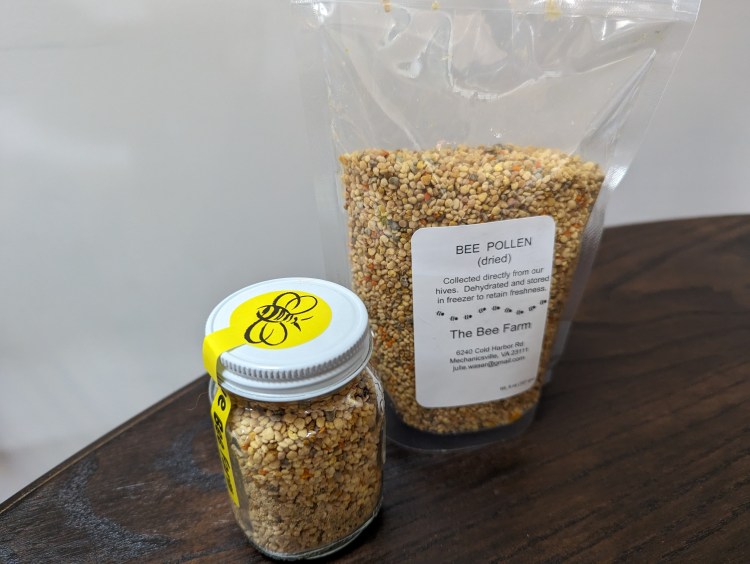
Bee Pollen: Bee pollen is a ball or pellet of field-gathered flower pollen packed by worker honeybees and used as the primary food source for the hive. It consists of simple sugars, protein, minerals and vitamins, fatty acids, and a small percentage of other components. Bee pollen is stored in the hive, mixed with saliva, and sealed with a drop of honey. Bee pollen is harvested as food for humans and taken for its many health benefits. Bee pollen is growing in interest due to its high nutritional properties, including being a reliable source of antioxidant as well as potentially having antimicrobial properties. Bee pollen is rich in micronutrients and minerals.
Collecting/storing bee pollen: Bees carrying pollen back to the beehive go through a device (pollen trap) that knocks the pollen off the bee. The pollen falls into a tray that is emptied daily. It is not uncommon for some bee debris (a leg or antennae) to be occasionally present in pollen. We store the pollen in the freezer for several days then dry it in a dehydrator before packaging. We recommend storing your pollen in the refrigerator (or freezer) to keep its freshness.
When ingesting bee pollen, it is best to start with just a few grains and make sure you do not react to the pollen. Build up to 1-2 tsp per day over time.
Potential risks of consuming bee pollen include contamination by fungal mycotoxins, pesticides, or toxic metals. Bee pollen is safe for most individuals for short term use, but for those with pollen allergies, allergic reactions may occur (shortness of breath, hives, swelling, and anaphylaxis). Bee pollen is not safe for pregnant women and should not be used during breastfeeding. Check with your health care provider before taking bee pollen.
2025 Pollen Pricing:
- Sample size: $3
- 2.5 oz jar: $12
8 oz bag: $25Sold Out
Propolis
Propolis is a natural resinous substance produced by honeybees from plant materials, such as tree buds, sap flows, and botanical sources. Bees collect this sticky substance and mix it with beeswax, honey, and enzymes to create propolis. The bees use propolis to seal and disinfect their hives, filling in gaps, and protecting the colony from pathogens and external threats.
Propolis has been used by humans for centuries for various purposes. It contains a complex mixture of compounds, including resins, waxes, essential oils, pollen, and bioactive compounds such as flavonoids and phenolic acids. These bioactive compounds give propolis its potential health benefits.
Propolis has antimicrobial, antifungal, and antiviral properties, which can help fight against bacteria, fungi, and viruses. It also has antioxidant properties, which can protect cells from damage caused by free radicals. As a result, propolis has been used in traditional medicine and natural health products for its potential immune-boosting, anti-inflammatory, and wound-healing properties.
Propolis is available in various forms, including raw chunks, extracts and topical ointments. It is used in products such as throat sprays, lozenges, creams, and oral supplements. However, it’s important to note that propolis can cause allergic reactions in some individuals, especially those allergic to bee products or certain plant resins. If you have any concerns or allergies, it’s best to consult with a healthcare professional before using propolis.
- Raw Propolis: Small sample size bag $3 (This is stored in my freezer – so you will need to contact me).
***Not stocked in the honey house – please contact me for this product***
Beeswax:
Beeswax is a natural substance produced by honeybees. It is a waxy substance secreted by the bees’ wax glands and is used by them to build and maintain the structure of their honeycombs. Beeswax is composed primarily of esters of fatty acids and various long-chain alcohols.
Beeswax has been used by humans for thousands of years for various purposes. It has a wide range of applications due to its unique properties. It’s important to note that beeswax is typically harvested from beehives without causing harm to the bees. Beekeepers carefully collect the excess wax from the honeycombs, allowing the bees to continue using and rebuilding their hives. Once the wax has been collected it is cleaned, then melted in a solar wax melter to remove impurities. At this point the wax is strained one last time to remove the smallest of debris. I typically average 1 # finish product for every 100 pounds of honey we extract. Common uses include candle making, cosmetics, food preservation, wood polish, sewing, crafts, and shoe / leather care.
Beeswax has been used by humans for thousands of years for various purposes. It has a wide range of applications due to its unique properties. It’s important to note that beeswax is typically harvested from beehives without causing harm to the bees. Beekeepers carefully collect the excess wax from the honeycombs, allowing the bees to continue using and rebuilding their hives. Once the wax has been collected it is cleaned, then melted in a solar wax melter to remove impurities. At this point the wax is strained one last time to remove the smallest of debris. I typically average 1 # finish product for every 100 pounds of honey we extract. Common uses include candle making, cosmetics, food preservation, wood polish, sewing, crafts, and shoe / leather care.
Beeswax Pricing:
.5 oz bag: $3
2 oz bag: $6
1 lb block: $20
 Cold Harbor Bee Farm LLC